

Wavelength
532 / 755 / 1064nm
500–1200nm (broadband)
532 / 1064nm
694nm (single, ruby)
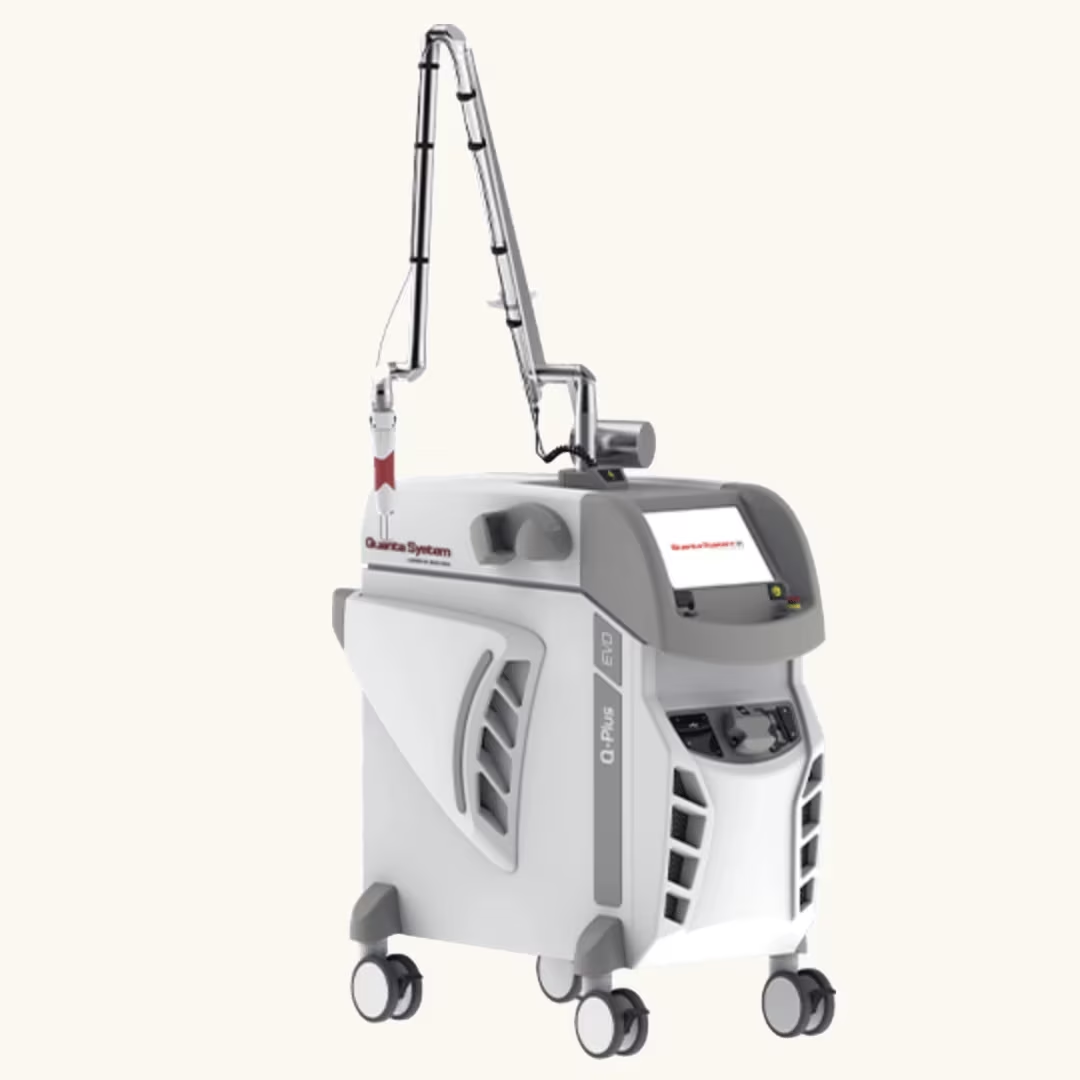
A 694nm Q-switched ruby laser delivered as fractional shots. Leveraging high melanin selectivity to brighten skin tone while minimizing downtime.
The 694nm Q-switched ruby laser is well absorbed by melanin. It selectively targets the melanin behind dark spots, dullness, and hyperpigmentation, and is suited for pigmented lesions in the epidermis and upper dermis.
A 9mm fractional handpiece delivers micro-spots so that thermal impact on surrounding tissue is minimized and downtime is shortened. Recommended overlap is 10–20%.
For melasma care—where strong stimulation should be avoided—low-fluence fractional delivery may be used. The doctor adjusts settings based on skin condition.
Nanosecond-order pulses selectively break down melanin while limiting thermal diffusion to surrounding tissue.
The clinic uses Quanta System (Italy) Q-Plus R, approval number 22700BZI00042000, a Class III specially controlled medical device approved in Japan.

Made by Quanta System SpA (Italy)
A medical device that delivers a 694nm Q-switched ruby laser as fractional shots. With high selectivity for melanin, it is used for spots, melasma, dullness, and post-inflammatory pigmentation. MHLW-approved (approval no. 22700BZI00042000, Class III highly controlled medical device).
There are several laser devices for pigment treatment, each with different strengths and downtime characteristics. Ruby Fractional (Q-Plus R) uses the 694nm ruby wavelength for high melanin selectivity, and fractional delivery is designed to minimize downtime.
Illustrative diagram based on general device characteristics. Actual results vary with treatment settings and skin condition.
A comparison based on general device characteristics — effects and indications vary by skin condition. The final treatment plan is determined by the doctor during consultation.
Ruby Fractional works best on pigmentation where melanin sits in the surface to upper dermis. Number of sessions and how results appear vary by pigment type, so the doctor advises based on skin assessment during consultation.

The 694nm ruby wavelength selectively targets surface melanin.
Improvement is pursued through careful output settings and repeated sessions.
Cases where Ruby Fractional may not deliver sufficient effect, or where other approaches are more suitable.
* Results vary by individual. The final treatment plan is determined by the doctor based on skin assessment during consultation.
Following the official Quanta System Ruby Fractional treatment manual, the doctor determines wavelength, output, handpiece size, and shot density. Fluence is adjusted within 1.0–1.4 J depending on skin type and area.

Treatment approach based on the official manual. Actual output and number of sessions are determined by the doctor after skin assessment.
Treated in 4 sections / care around the lashes
Zig-zag from nasal wings to tip
Treated in 2 sections / care around the hairline
Treated with care around the hairline
Treated in 2 sections / lower lip pulled down
Skin stretched, 1–2 rows of shots
* The above is the standard treatment example per the official manual. The doctor adjusts output and protocol based on skin type, pigment lesions, and medical history.
| Item | Details |
|---|---|
| Duration | About 30–45 minutes (about 500 shots for full face, including consultation) |
| Downtime | Day of: strong redness (makeup recommended from next day) / Next day: redness subsides, mild itching / Day 3+: redness fades / 2–4 weeks: pigment gradually lightens (micro scabs may shed) |
| Frequency | Around 3–5 sessions every 2–4 weeks. Skin type and energy settings are determined by the doctor. |
| Makeup | Limited on the day of treatment (possible 4 hours later; full makeup recommended from the next day) |
| Bathing | Shower the same day is OK; avoid bath, sauna, and exercise on the day of treatment |
| Contraindications |
|

| ルビーフラクショナル 全顔 | 単発 1回 | 22,500 JPY(Tax incl: 24,750 JPY) |
| 5回コース | 100,000 JPY(Tax incl: 110,000 JPY) |
| ルビーフラクショナル 部分(頬・目周り等) | 単発 1回 | 13,500 JPY(Tax incl: 14,850 JPY) |
Book a free consultation
Free consultation available
